Professional Heavy Duty Towing in Cornwall, Ontario for Fully Loaded Truck
Professional Heavy Duty Towing in Cornwall, Ontario for Fully Loaded Truck Home Blogs Yes, a fully loaded truck can often...
Read More →

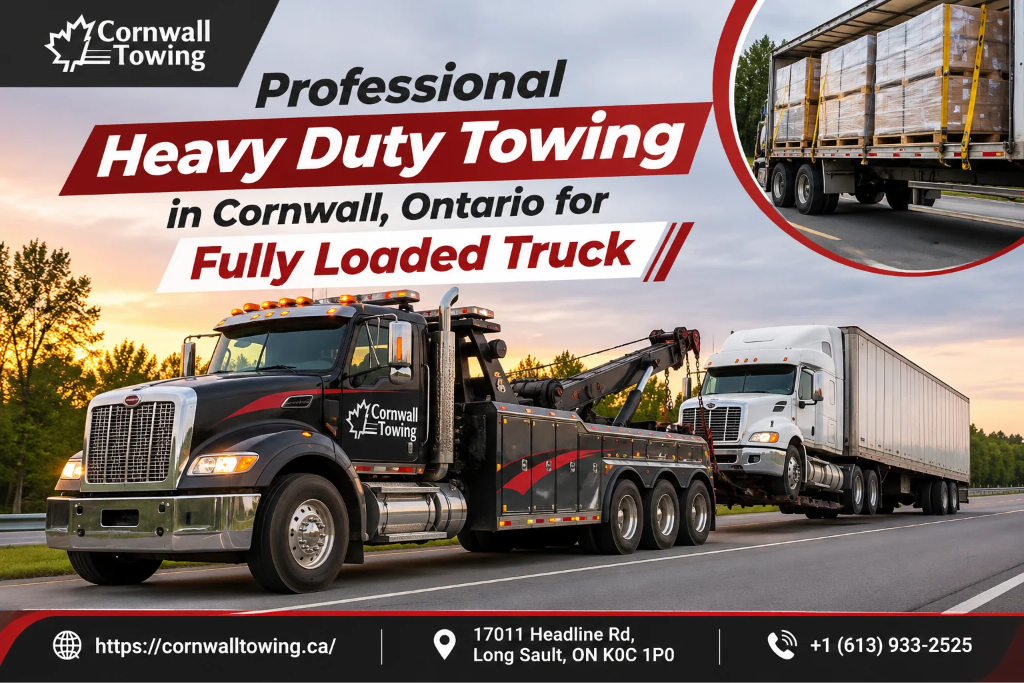
For commercial drivers and fleet managers, understanding these factors can help reduce unnecessary delays, protect cargo, and make it easier to arrange suitable assistance. Choosing an experienced Towing Company in Cornwall is an important step when a loaded commercial vehicle becomes disabled.
A fully loaded commercial truck can often be recovered safely, provided the equipment and recovery method are suitable for the specific situation. However, the truck’s total weight is only one part of the assessment. Before recovery begins, the towing operator needs to consider several factors.
The truck’s actual loaded weight and its manufacturer-specified weight ratings are different measurements, and both may be relevant when planning recovery. A towing provider should assess the situation before deciding whether the truck can be towed in its current condition or requires additional preparation.
Heavy commercial vehicles are more complex to recover than many passenger cars. Their weight, size, and configuration can make lifting, securing, and transporting them more demanding.
For example, a loaded tractor-trailer with a damaged axle may not be suitable for a conventional towing method. Similarly, a delivery truck that has lost steering control may require specialized equipment to move it without causing further damage. Heavy Duty Towing in Cornwall is a relevant consideration when a commercial vehicle breaks down and requires equipment designed for heavier vehicles.
A suitable recovery plan may involve:
The required equipment depends on the truck and the nature of the breakdown. Drivers should provide accurate information about their vehicle so the towing provider can determine what resources may be needed.
Loaded truck broken down in Cornwall? Call now and tell the dispatcher what happened.
Call Cornwall Towing atNot necessarily. A fully loaded truck does not always need to be unloaded before it can be towed. The decision depends on the vehicle’s condition, actual weight, cargo stability, available recovery equipment, and the method selected by the recovery operator.
For instance, a truck with a mechanical problem that does not affect its ability to be safely secured may be recoverable while carrying its load. However, a vehicle with significant structural damage, an unstable load, or a weight that exceeds the available equipment’s capacity may require cargo transfer or unloading before recovery can proceed. In some cases, the cargo may need vehicle transport support so it can continue to its destination while the disabled truck is dealt with separately.
Cargo handling may also become necessary when the truck is positioned in a difficult location or when its damaged components prevent safe movement.
Truck drivers should not assume that unloading is always required or that the vehicle can always be towed fully loaded. Instead, provide the towing operator with information about the cargo, trailer, approximate weight, and known damage. If the cargo contains hazardous materials, disclose that information before recovery arrangements are made. Unloading or transferring cargo should be handled with appropriate equipment and safety precautions.
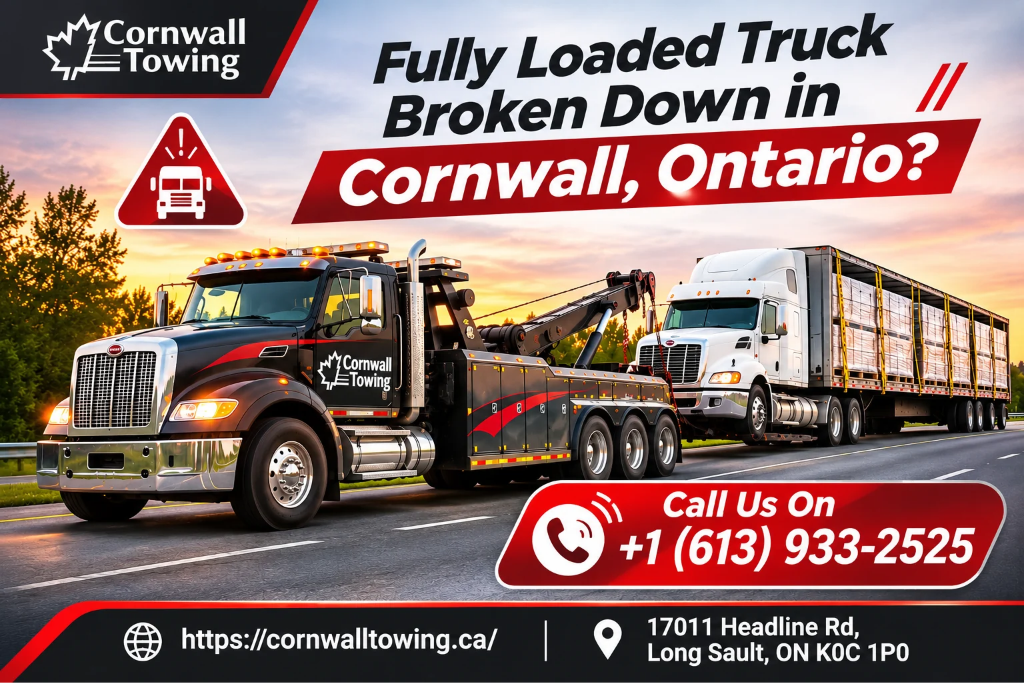
A breakdown can be stressful, especially when a delivery deadline is approaching. Taking the right steps can help the driver remain safe and provide the information needed to arrange recovery.
If the truck can be moved to a safer location without creating additional danger, do so. Otherwise, avoid attempting to move a disabled vehicle when doing so could worsen the situation. Activate the hazard warning lights when appropriate, follow applicable road-safety procedures, and stay away from moving traffic.
Identify the general nature of the problem if it is safe to do so. Note any obvious warning signs, such as a damaged wheel, smoke, fluid leakage, or unusual vehicle positioning. Do not crawl under the truck, approach hazardous cargo, or attempt repairs in an unsafe location. For minor issues such as a flat tire or a dead battery, roadside assistance may get you moving again without a tow.
Explain that the truck is carrying cargo and requires an assessment for heavy-duty recovery. Mention any known mechanical damage and whether the truck or trailer is obstructing traffic. This information helps the provider understand the situation before deciding on the appropriate equipment and recovery approach.
Provide the exact location, vehicle type, approximate loaded weight if known, cargo details, and intended destination. If the truck belongs to a fleet, notify the relevant fleet manager or dispatcher so they can coordinate delivery changes and cargo arrangements.
Once assistance has been arranged, follow the operator’s directions. Avoid moving the vehicle or attempting additional repairs unless it is safe and appropriate to do so.
Clear information can help the provider determine what type of recovery may be required. Try to have the following details ready:
You do not need to diagnose the problem yourself. Accurate observations are more useful than guessing at the cause of the breakdown. If the truck is in an immediately dangerous position, make that clear when requesting assistance.
Commercial vehicle breakdowns do not always happen during convenient hours. A truck may become disabled during an overnight delivery, an early-morning trip, or a long-distance journey. A 24/7 Towing Company in Cornwall, where such availability is confirmed, can be a useful option for drivers who need assistance outside regular business hours.
When choosing a provider, confirm that it can handle the specific commercial vehicle and recovery situation. Not every towing service has equipment suitable for every loaded truck. A recovery provider may need to assess the vehicle’s weight, condition, location, and cargo before confirming the next steps.
If the truck cannot be repaired right away, secure vehicle storage can keep it protected until repairs or further arrangements are made. Clear communication can also help fleet managers understand the likely recovery requirements and coordinate alternative delivery arrangements. Before arranging service, confirm the provider’s current availability, equipment suitability, and any additional requirements for the particular breakdown.
When a loaded truck breaks down, the cheapest or closest option may not necessarily be the most suitable. Before arranging recovery, consider whether the provider can accommodate the vehicle’s weight, configuration, and mechanical condition.
Ask about the equipment required, the proposed recovery method, any cargo-handling needs, and the expected charges. It is also useful to confirm whether the provider can assist at your specific location and during the time you need help.
For drivers seeking heavy duty towing, these questions help establish whether a provider is equipped to address the actual breakdown rather than a company set up mainly for light duty towing of cars and small vehicles. Providing accurate details at the beginning can make the assessment more efficient and help avoid arranging unsuitable equipment.
A fully loaded truck can often be towed after a breakdown, but the safest practical approach depends on its weight, cargo, mechanical condition, and location. In some situations, it may be possible to recover the truck without unloading it. In others, additional preparation or cargo transfer may be necessary.
Prioritize safety, share accurate information about the vehicle, and arrange an assessment with a suitable towing provider before attempting to move the truck. If you want to know who you will be dealing with, you can learn more about our experienced team. If you need assistance with a commercial vehicle breakdown, contact Cornwall Towing to discuss your situation and confirm the appropriate service options.
Cornwall TowingNeed help with a loaded truck in Cornwall? Call now and we will help you plan the right recovery.
Call Now atYes, in some situations. The decision depends on the total weight, cargo stability, vehicle condition, and available recovery equipment. A towing operator should assess these factors before confirming the recovery method.
Provide the breakdown location, truck and trailer type, approximate loaded weight, cargo details, known mechanical damage, and intended destination. Disclose any hazardous cargo when requesting assistance.
Potentially, but damaged axles or brakes can affect how the vehicle must be handled. The operator needs to assess the damage and determine an appropriate recovery method. Do not attempt to move the truck if doing so could be unsafe.
Promptly report the breakdown, provide accurate vehicle and cargo information, coordinate with the towing provider, and communicate with the driver and delivery team. Early coordination can help the team plan its next steps.
Prioritize personal safety, follow applicable road-safety procedures, and contact emergency services when necessary. Inform the towing provider about the vehicle’s exact location and the immediate hazards. Do not attempt a risky recovery yourself.